Saudi Arabia Ranks 8th of 104 on FDI Restrictiveness
Published 9 October 2026 · Last updated 12 October 2026

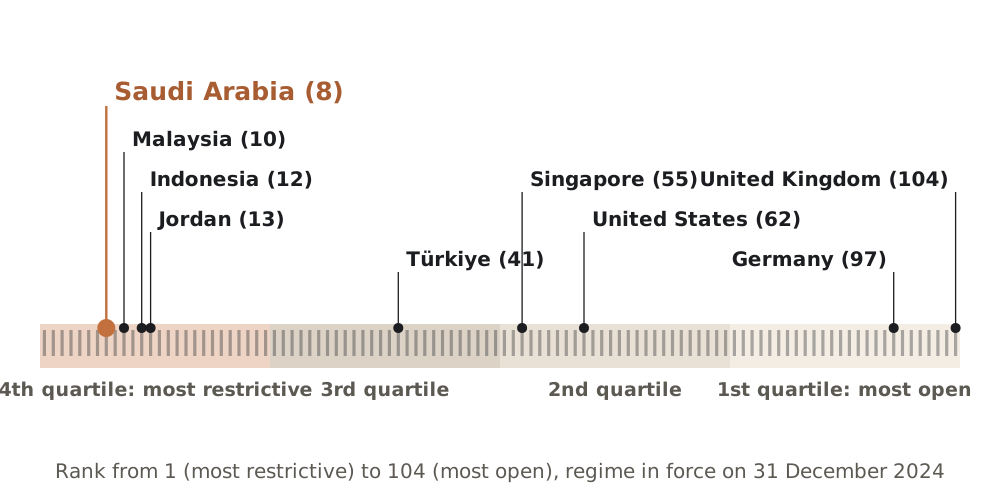
Saudi Arabia ranks 8th among 104 economies on the OECD FDI Regulatory Restrictiveness Index (where rank 1 is the most restrictive), which places it in the most restrictive quartile as the OECD divides the economies, according to the 2024 index published by the OECD. This does not deny that some restrictions have eased in recent years, but it shows that legal restrictions on foreign direct investment in Saudi Arabia were among the highest of the economies the index covers in 2024.
What is the FDI Regulatory Restrictiveness Index?
The index measures legal restrictions on foreign direct investment in four categories: foreign equity restrictions, screening and approval, restrictions on foreign key personnel, and other restrictions such as procurement preferences. An economy's score runs from 0 (open) to 1 (closed). The 2024 index covers about 104 economies representing 92% of the world's FDI stock.
Where does Saudi Arabia sit among economies?
According to the order of economies in Figure 1.1 of the OECD report (the rank position is a Zeej count):
- Before Saudi Arabia (more restrictive): Libya, Lesotho, Laos, Seychelles, the Philippines, Malawi and Algeria.
- Saudi Arabia: rank 8.
- After it: Malaysia (10), Indonesia (12), Jordan (13) and Egypt (15).
- Less restrictive: Türkiye (41), Singapore (55), the United States (62), Germany (97) and the United Kingdom (104).
In the same figure the OECD places ranks 1 to 26 in the 4th quartile, the most restrictive.
Has Saudi Arabia eased its restrictions?
Yes, according to the OECD itself. It notes that Saudi Arabia is among the countries in the region that recently eased horizontal foreign equity restrictions and key-personnel restrictions, and that 27 non-OECD economies eased their restrictions between 2018 and 2024, cutting their scores by 19% on average. The 8th rank therefore describes the level of restrictions in 2024, not their direction.
How does Saudi Arabia compare with its neighbours in the ranking?
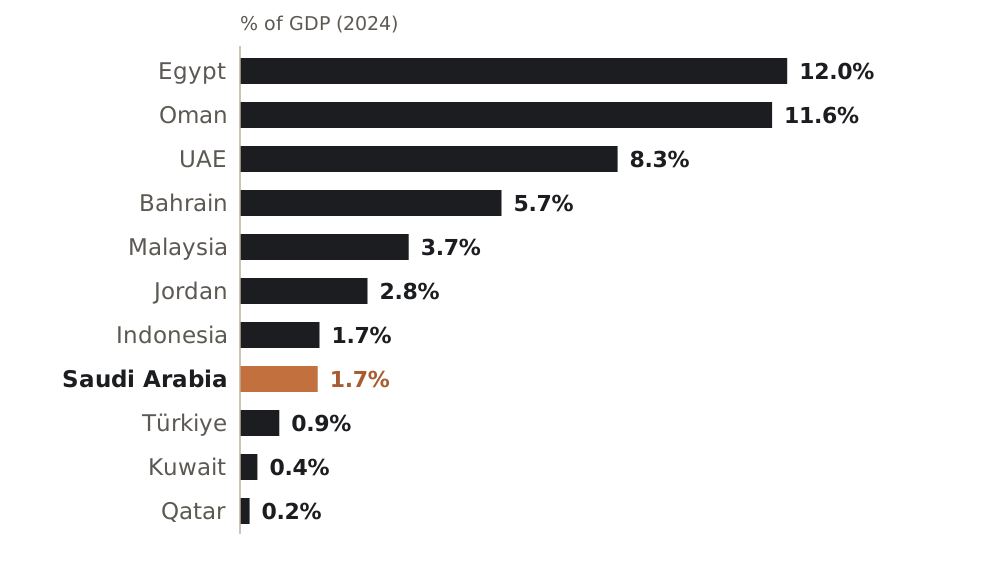
On the same ranking, Saudi Arabia (8) comes before Jordan (13), Egypt (15) and Türkiye (41), neighbouring or nearby economies, meaning it is legally more restrictive than these countries according to the index. By contrast, net FDI inflows were about 1.7% of GDP in Saudi Arabia in 2024, against 2.8% in Jordan, 12.0% in Egypt and 0.9% in Türkiye, according to the World Bank; the UNCTAD report notes that the exceptional Ras El-Hekma deal lifted Egypt's inflows in 2024. Legal restrictiveness alone does not explain the size of foreign investment relative to the economy.
Does restrictiveness mean Saudi Arabia is less attractive?
Not necessarily. Legal restrictiveness is one measure, and attractiveness is measured by others. FDI inflows into Saudi Arabia reached USD 32.6 billion in 2025, the highest between 2020 and 2025 according to UNCTAD's table, and the country was 17th in 2024 according to UNCTAD and sits 13th in 2025 among the 20 largest host economies in UNCTAD's chart (position counted by Zeej). The full picture is that money does come in, and that entry is conditional on minimum thresholds and commitments that vary by route, as in the Investor Guide issued by the Ministry of Investment.
What are the limits of this ranking?
- It concerns legal restrictions on foreign direct investment, not the whole business environment or operating cost.
- The rank is taken from the order of economies in Figure 1.1 of the OECD report. Saudi Arabia's exact score is read from the OECD database, and we do not use an approximate figure for it here.
- The index describes the investment regime as it stood on 31 December 2024, before the updated Investment Law took effect in 2025, according to the US Department of State.
What does this mean for an investor's decision?
The investor should ask first about the route and the minimum commitment, not about the sector alone, because the minimum thresholds for full foreign ownership in the Ministry of Investment's guide (under the updated law) are, as we read it, what corresponds to these restrictions in practice today. Our full study, "How to Invest in Saudi Arabia: New Law and Capital Flows", published at the end of this month, sets this picture out in detail with a practical decision framework.
Zeej works with investors on assessing the opportunity and choosing the route, within our «Investment Opportunity Assessment» service.
Want to see where your business stands?
Start with our free diagnostic and get a first, structured reading of your business.
Start the Free Diagnostic